
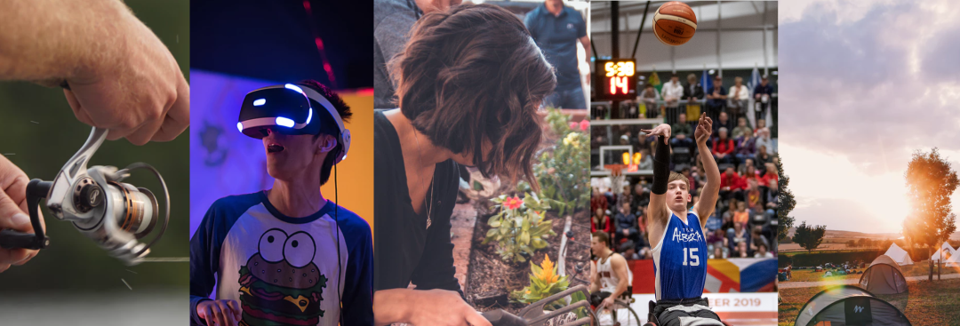
Exploring Calgary’s Active Economy
An active economy drives significant economic and social benefit to a city including direct benefits related to economic growth and employment, and indirect ones such as those related to social relationships. Indirect benefits include the development of skills essential to innovation and economic diversification.
The active economy, parallels and compliments the principle of the creative economy which is a lens to evaluate the impact of arts and culture on economic and social prosperity.
The active economy includes all for-profit, not-for-profit and public organizations and individuals who directly or indirectly contribute to the development and delivery of sport and active recreation experiences, whose aim is expressing or improving individual or community physical, mental and/or social health and wellness.
For additional background, refer to the ActiveCITY working paper Calgary’s Regional Active Economy: An Exploratory Study of the Role of an Active Ecosystem in Generating Community Value. Authored by Dr. David J. Finch, Dr. David Legg, Dr. Norm O’Reilly, Jason Ribeiro and Dr Trevor Tombe.
What Sectors are in the Active Economy?
We propose that the active economy is composed of ten sectors, and five stakeholder groups:

Below are definitions and examples for each of the ten sectors:
Organized SportS
Competitive sports are activities involving physical exertion, skill as the primary focus of the activity, with elements of competition where rules and patterns of behaviour governing the activity exist formally through organizations. Examples include:
Forms of physical sports (e..g soccer)
Forms of motorized sports (e.g. autoracing)
Coordination sports (e.g. darts)
Animal-supported sports (e.g. Show jumping)
Sport leagues (Amateur and professional)
Sport clubs and teams (Amateur and professional)
Sport governing bodies (e.g. FIFA)
Tournaments (e.g. World Cup).
Active Recreation
Active recreation are activities engaged in for the purpose of relaxation, health and well being or enjoyment with the primary activity requiring physical exertion.They are often spontaneous in nature and participant led with a low level of organization and limited structure. Examples include:
Active transportation (e.g. cycling, walking, skateboarding),
Aerobics
Gardening
Hiking
Recreational hockey
Swimming
Snowmobiling
Horseback riding
Tai Chi
Design & Infrastructure
Includes all for-profit, not-for-profit and public infrastructure required for delivering competitive sports and active recreation experiences. Scope includes the design, construction, maintenance, repair, operation, and the supervision of infrastructure and open spaces. Design and infrastructure can be broken into indoor and outdoor forms of infrastructure:
Indoor infrastructure includes arenas, gymnasiums, community centres and halls, indoor pools, cultural centres, senior and youth centres.
Outdoor infrastructure includes stadiums, parks, playing fields, play-structures, trails, forested areas, outdoor pools, splash pads, pavilions, gardens, waterfronts, marinas, outdoor courts (e.g., tennis, basketball), outdoor rinks and golf courses,additional civic infrastructure that supports the delivery of active ecosystem products and services (e.g. Cycle tracks).
Tourism
Tourism directly associated with competitive sport or active recreation development or delivery. Examples include:
Ecotourism
Hosting major sporting or active recreation events
Wellness tourism
Tour companies
Accommodation providers
Transportation services
Equipment
Development, manufacturing and sales of equipment associated with competitive sport or active recreation development or delivery. Examples include:
Bike manufacturers
Racket sport manufacturers
Golf manufacturers
Sport and active recreation retailers
Apparel & Accessories
Development, manufacturing and sales of apparel and accessories associated with competitive sport or active recreation development or delivery. Examples include:
Licensed apparel manufacturers
Footwear manufacturers
Sport and active recreation apparel retailers
Media & Content
Media and content directly associated with competitive sport or active recreation development or delivery. Examples include:
Broadcast rights holders
Media organizations and individuals who specialize in sport or active recreation.
Sport and active recreation content developers
Professional Services
Professional services directly associated with sport or active recreation development or delivery. Examples include:
Ticketing services
Marketing agencies
Sport advisory services
Sport law
Sport Betting
Sport betting is predicting competitive sports results and placing a wager on the outcome. Examples include:
Lottery and gaming authorities
Casinos
Fantasy sports
Horse racing
Health & Wellness
Health and wellness products and services supporting the delivery or engagement in competitive sport or active recreation. Examples include:
Traditional & Complementary Medicine
Preventive & Personalized Medicine and Public Health
Healthy Eating, Nutrition & Weight Loss
Fitness & Mind-Body
Workplace wellness
Wellness real-estate
ActiveCITY Spotlight
A social capital view of an Olympic and Paralympic Games bid exploration process
Authored by Dr. David J. Finch, Dr. David Legg, Dr. Norm O’Reilly, Stefan Wright and Brody Norton.
The purpose of this study is to examine the Olympic and Paralympic bid exploration process adopted by Calgary, Canada (‘Calgary Model’) to explore whether it provides a template on how future communities could leverage bid exploration processes to generate social capital though increased network connectivity and community ownership. In doing so, we examine the four research questions:
Research Question 1: How did the Calgary Model embed community values as central to all decision-making processes?
Research Question 2: How did the Calgary Model engage diverse stakeholders, particularly community interest groups, in the strategic activities?
Research Question 3: How did the Calgary Model empower communities to become agents of change?
Research Question 4: How did the Calgary Model provide sustained open communication towards mutual learning?
The published article can be found by clicking HERE
For more information on the activecity collective, please contact:
Dr. David Finch
Co-Chair, ActiveCITY Collective
Email: [email protected]